Brecon by-election: Lib Dems beat Conservatives
- Published

The Lib Dems have won a by-election in Brecon and Radnorshire
The Liberal Democrats have won an important vote in Wales called a by-election.
Chris Davies - a member of Boris Johnson's Conservative Party - had been the MP for Brecon and Radnorshire. But in the by-election, he was beaten by Liberal Democrat Jane Dodds by 1,425 votes.
This means that she will replace him in Parliament and become the politician to represent people in this area.
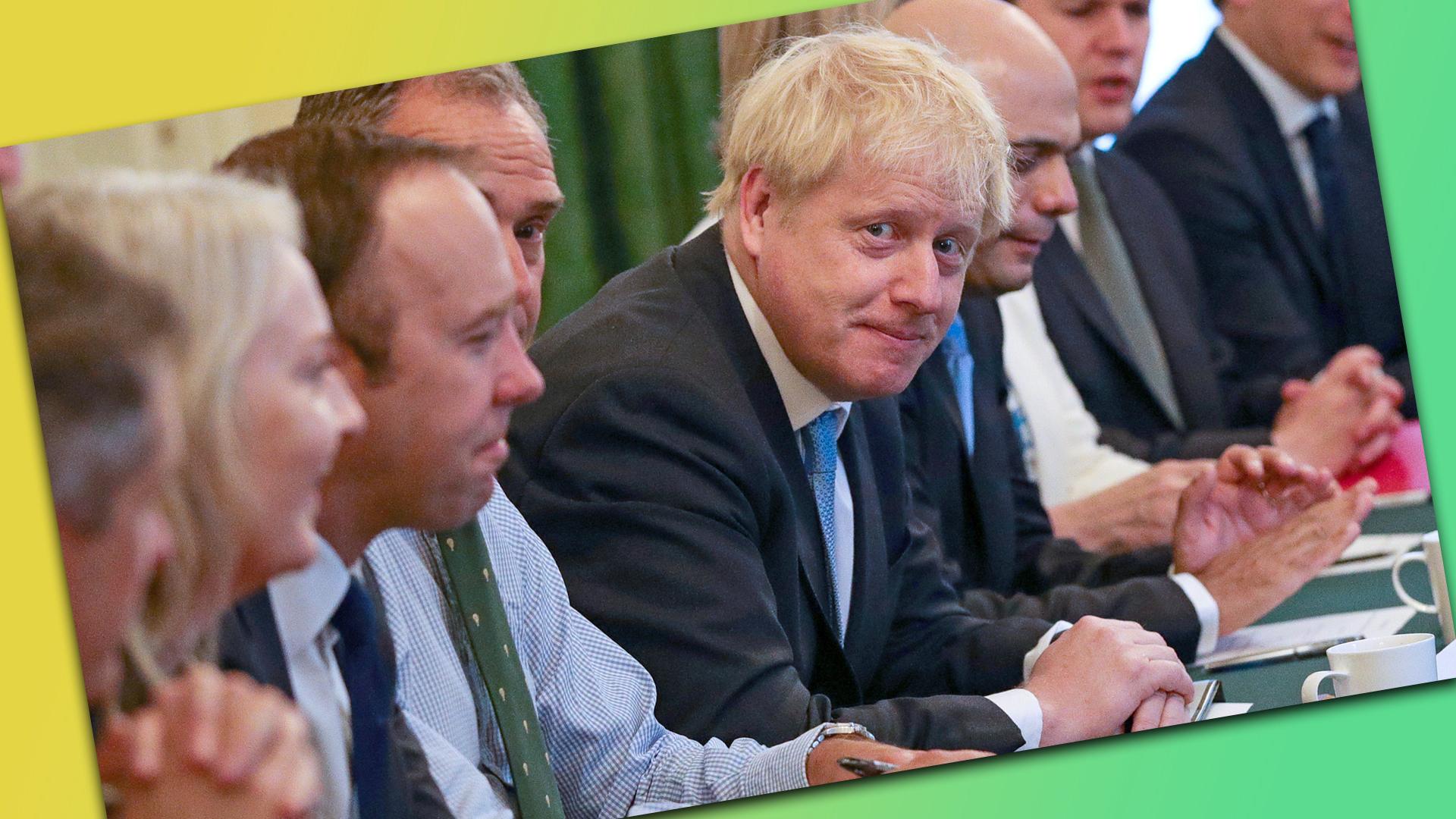
The Lib Dems' victory in this vote is particularly important because it has had an impact on how many MPs there are in Parliament who support the prime minister.
For Boris Johnson, having fewer MPs on his side in the House of Commons means that it could be more difficult for him to get Parliament to agree with what he wants to do.
He will rely heavily on not only his own MPs to vote in favour of his plans, but also MPs from the Democratic Unionist Party (DUP), which the government relies on too.
Why was there a by-election?
A by-election is a special vote that takes place in between general elections when a seat in the House of Commons - basically, a spot for an MP - becomes available.
In the constituency of Brecon and Radnorshire, this by-election happened because of something called a recall petition.
A recall petition allows members of the public to trigger an election to re-choose their MP in exceptional circumstances. For example, if an MP is convicted of an offence or suspended, people can ask for a by-election.
A constituency is the name given to an area of the UK which is represented by an MP in Parliament. People who live in a constituency are known as the electorate and they vote for who they wish to be their MP and represent them in Parliament.
When MP Chris Davies was convicted for a false expenses claim, 19% of Brecon's voters signed a recall petition.
Despite his conviction (for which he pleaded guilty), the Conservatives reselected him as the party's candidate for this area.
However, he has now lost his seat in Parliament to the person who the Lib Dems put forward for the job.
Why does it matter?

A small majority in the House of Commons makes it more difficult for Prime Minister Boris Johnson to push some decisions through
In the last general election - when the whole of the UK votes for their MP (which determines which political party or parties will form the next government) - the Conservatives won the most seats out of everyone, but they didn't win enough to make a government on their own.
They had to make an agreement with Northern Ireland's Democratic Unionist Party (DUP) because it was only together that the two parties had enough seats to have a majority, and make the next government.
With one fewer Conservative MP in Parliament - because the MP for this area is now a member of the Liberal Democrats instead - Mr Johnson now has what's called a working majority of just one MP (when he used to have a majority of two).
This could make it harder for him to get Parliament to agree with what he wants to do.
With big issues like Brexit to sort out, having support in Parliament will be very important to Boris Johnson in the coming weeks and months.
- Published13 November 2019
- Published26 July 2019
- Published25 July 2019