Cyclone Amphan: India and Bangladesh face storm surges and Kolkata loses power
- Published
Cyclone Amphan hits India and Bangladesh
Cyclone Amphan has left widespread damage across parts of eastern India and Bangladesh after it brought winds of more than 165 kilometres an hour, and caused a huge storm surge.
Experts say it is one of the most powerful storms to hit the region for decades and millions of people were evacuated before the storm arrived, but coronavirus and social-distancing measures made mass evacuations tricky for authorities.
The eastern Indian city of Kolkata has been badly affected with many of its 14 million people left without electricity and communications have been disrupted.

"Houses look like they have been run over by a bulldozer," said one villager
People living in the area have described widespread "devastation", with trees and electricity pylons uprooted and roofs torn off buildings.
West Bengal chief minister Mamata Banerjee said the devastation was "a bigger disaster than Covid-19".
According to officials, over three million people were also left without power in Bangladesh.
Cyclone Amphan is forecast to move further into Bangladesh later on Thursday, and later into Bhutan but is expected to weaken as it moves.

Emergency workers drag away fallen trees
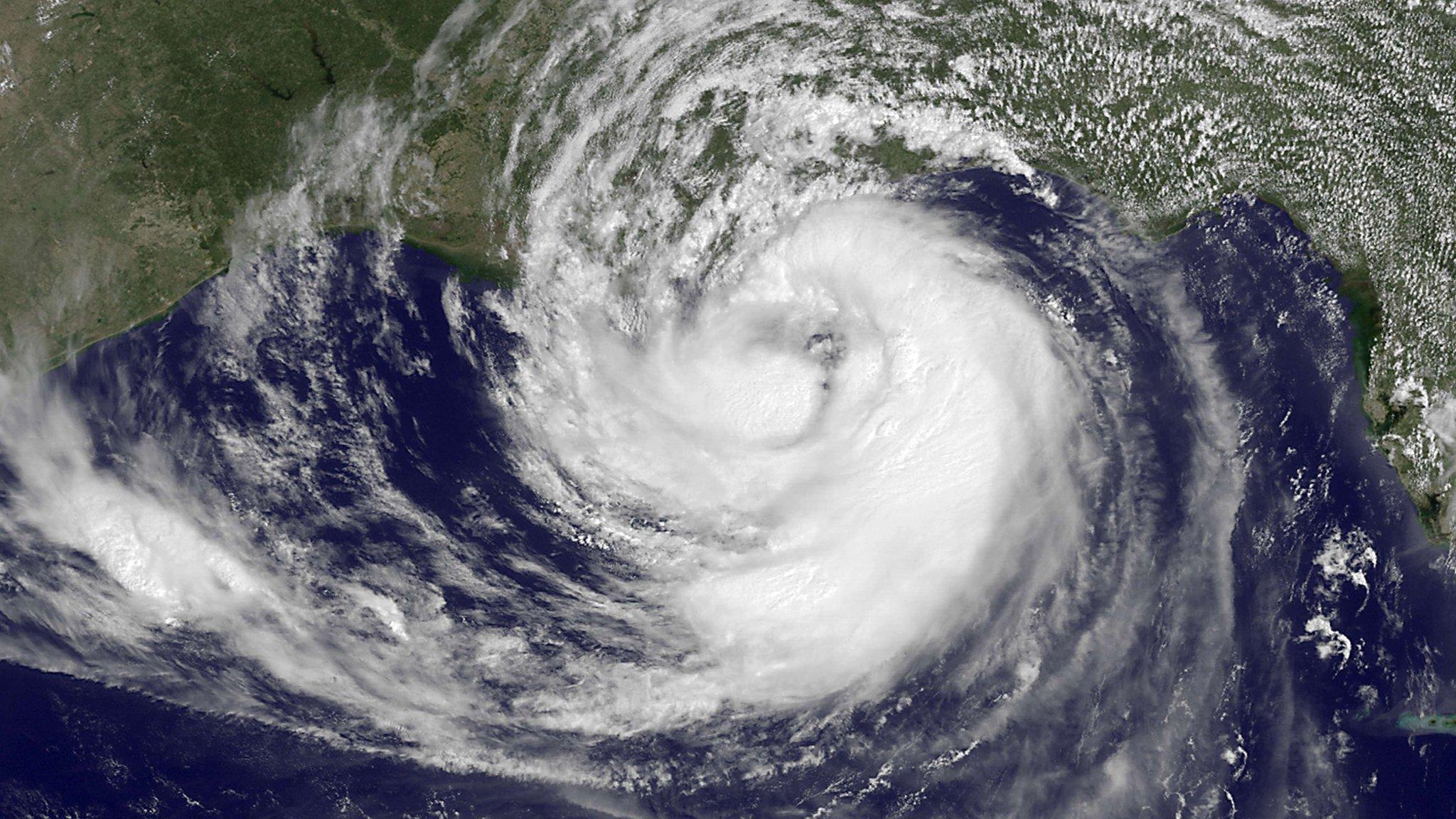
The cyclone originated in the Bay of Bengal in the Indian Ocean and was forecast to cause huge storm surges, severe flooding and mudslides.
The strong winds swept in waves up to 15 feet high in coastal areas of Bangladesh, which has swamped farmland and low-lying areas, according to officials there.

This was the scene in Digha, West Bengal in India after the cyclone hit
The Bay of Bengal is the north-eastern part of the Indian Ocean, surrounded by India, Bangladesh, Myanmar, as well as smaller groups of islands.
It is the largest bay in the world, with 500 million people living on the coastal rim that surrounds it.
It is also the site of the majority of the biggest tropical cyclones in world history.

Meteorologists say the areas sees some of the biggest storm surges in the world because the high sea surface temperatures trigger extremely strong cyclones.
The shallow bays cause water, pushed by the strong winds of a tropical cyclone, to get funnelled and pushed as the storm moves up the bay.
Coronavirus complications
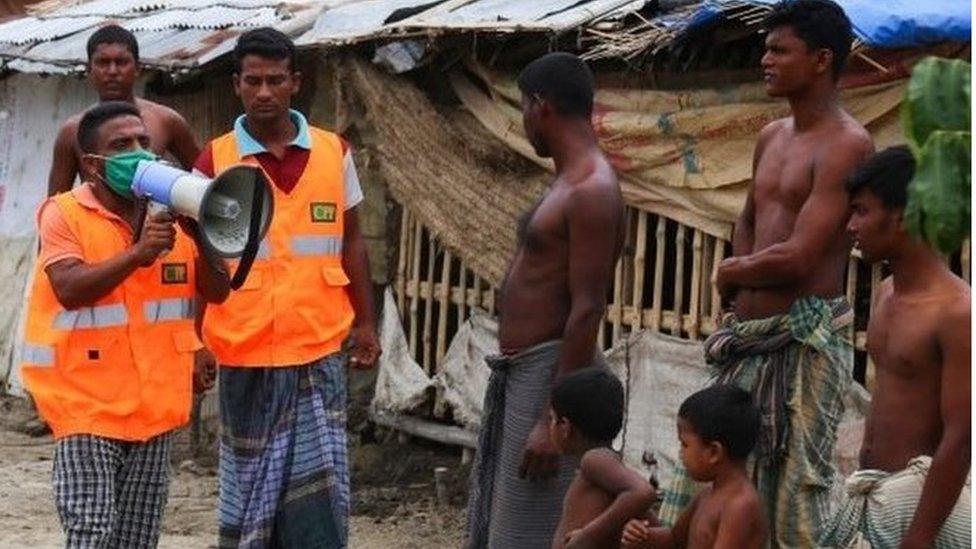
Authorities say they are struggling to mount relief efforts amid the coronavirus crisis.

A girl wearing a mask heads to a shelter in Bangladesh
India and Bangladesh have asked for schools and other buildings to be turned into temporary shelters - they need more space than usual in order to house people while maintaining social distancing.
Extra shelters have been prepared to allow for social distancing, while masks are also being distributed.

People have been finding shelter to stay safe against the storm
- Published19 May 2020
- Published31 August 2023
- Published5 April 2019