Why are people talking about the songs 'Rule, Britannia' and 'Land of Hope and Glory'?
- Published

The inclusion of some songs in this year's BBC Proms has led to a debate online.
The BBC Proms is a big classical music festival which is held every year, and runs for around eight weeks, finishing with a big concert called the Last Night.
This year the Last Night concert will be held on 12 September at the Royal Albert Hall in London.
Due to the current coronavirus pandemic, there will be no live audience at the concert, and fewer musicians and singers who will be socially distanced.
Many of the songs played on the Last Night are traditional British songs, like the national anthem and 'You'll Never Walk Alone'.
However, some people think that some of the songs including 'Rule, Britannia!' and 'Land Of Hope And Glory' should not be played any more, because of their words and links to the British Empire and the days of colonialism and slavery.
The BBC said that this year the songs will be played by the orchestra but without singing the words because of coronavirus restrictions, but that they would return with words when coronavirus restrictions end.
A BBC spokesperson said: "For the avoidance of any doubt, these songs will be sung next year. We obviously share the disappointment of everyone that the Proms will have to be different but believe this is the best solution in the circumstances and look forward to their traditional return next year."
The history of Rule, Britannia!

Here is Thomas Arne's composition for Rule, Britannia!
Rule, Britannia! was based on a poem by James Thomson, and set to music by Thomas Arne in 1740.
It is strongly associated with the Royal Navy and the British Empire, and contains lyrics such as:
"The nations, not so blest as thee / Must, in their turns, to tyrants fall.
"While thou shalt flourish great and free / The dread and envy of them all.
"Rule, Britannia! rule the waves / Britons never will be slaves."
The song is often played during times of national pride, for example in 1945 when World War Two ended.
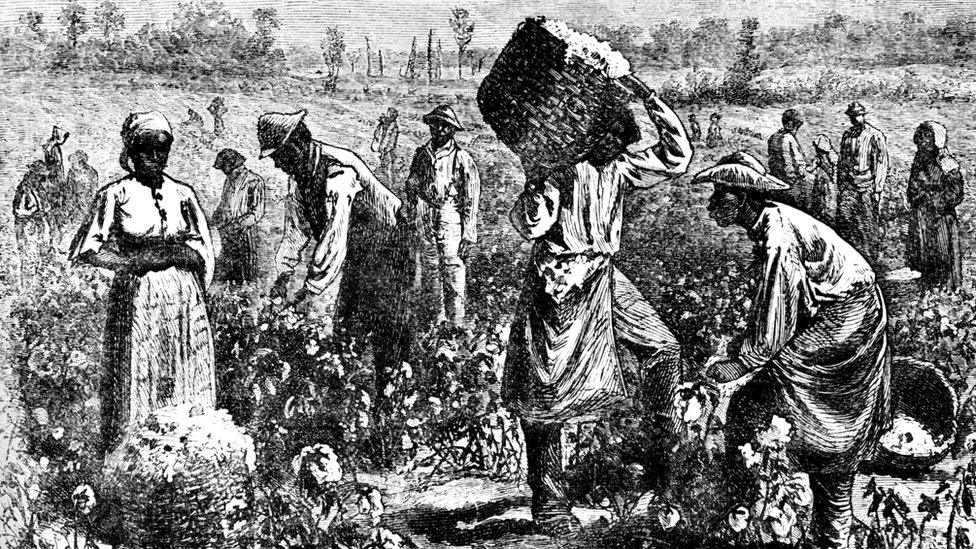
An 'Empire' is a group of countries ruled over by a King, Queen or country. In the 16th Century Britain began to sail around the world, taking control over other countries such as India, parts of Africa and Hong Kong. This was seen as a very controversial period in Britain's history. Britain became very wealthy by trading items and people from these countries as slaves. To this day countries still feel the effects of British colonisation.
The history of Land of Hope and Glory

Edward Elgar was a famous composer from the 20th Century
Land of Hope and Glory is another patriotic song, which was composed by Edward Elgar, with lyrics by A. C Benson, in 1901.
The song caught the attention of King Edward VII (Queen Victoria's son) who asked for it to be played at his coronation when he became King of England.
To be 'patriotic' means you are very proud of your country, and feel a strong sense of love and loyalty to it.
It makes reference to the "might" of the British Empire, and Britain's 'power' and has lyrics such as:
"Land of Hope and Glory, Mother of the Free,
How shall we extol thee, who are born of thee?
Wider still and wider shall thy bounds be set;
God, who made thee mighty, make thee mightier yet,
God, who made thee mighty, make thee mightier yet."
These days the song is often performed at sporting events from England rugby matches to the Commonwealth Games.
Why do some people think these songs are controversial?

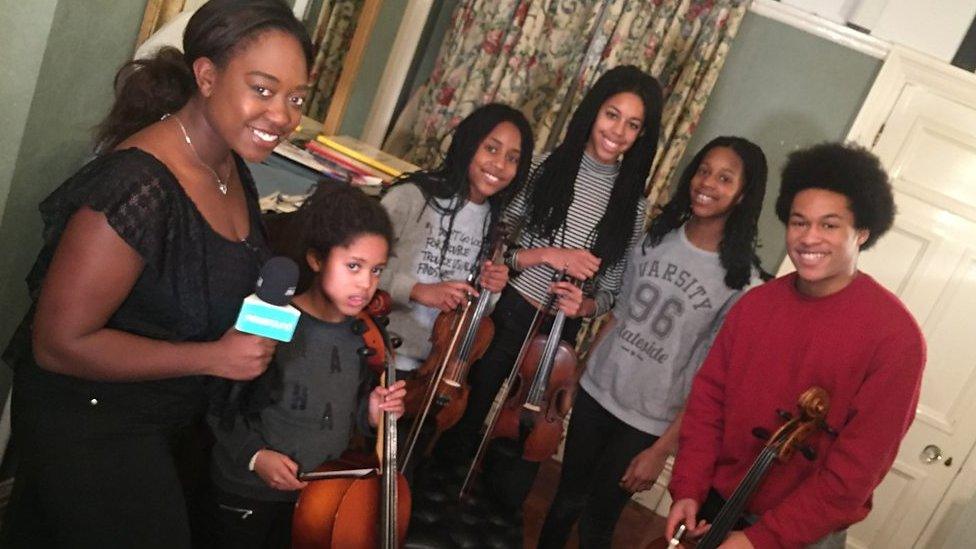
Chi-chi Nwanoku's Chineke! Foundation is about "championing change and celebrating diversity in classical music"
Both of these songs make reference to the British Empire, which some people find to be problematic.
Last year, pop singer Lily Allen said online: "Sorry what? Britannia rule the waves… I think we should not [sing] this song anymore."
If something is controversial it divides opinions - this means people can't agree and have opposite views on it.
Chi-chi Nwanoku who runs the Chineke! Foundation, which aims to provide opportunities for black, Asian and ethnically diverse classical musicians in the UK and Europe, said she would be "elated" if the songs weren't played anymore.
"We find it offensive," she said. "Of course I know other people are going to want to cling to it, but I know why they want to cling to it.
"These songs are jingoistic echoes of empire and, depending on what side of the fence you're sitting on, you either feel joyous, emboldened and patriotic and immediately identify with all the sentiments of it."
When a person believes that their country is always right and is in favour of aggressive acts against other countries.
But, she continued: "For any conscious black person who is aware of their history, the empire and colonialism, for example, they will struggle to enjoy the patriotic jingoism of these songs."

Norman Lebrecht says Rule, Britannia! is a Proms "tradition"
On the other side of the argument, music writer Norman Lebrecht says the songs bring the country together, rather than tear it apart.
"Rule, Britannia! is very much a part of the Proms, it's a tradition that goes back at least seven decades, and it's a unifying force for the nation," he said.
"It's the end of the summer, it's the beginning of what promises to be an extremely bleak winter of recession, it raises people's spirits, it brings us together."
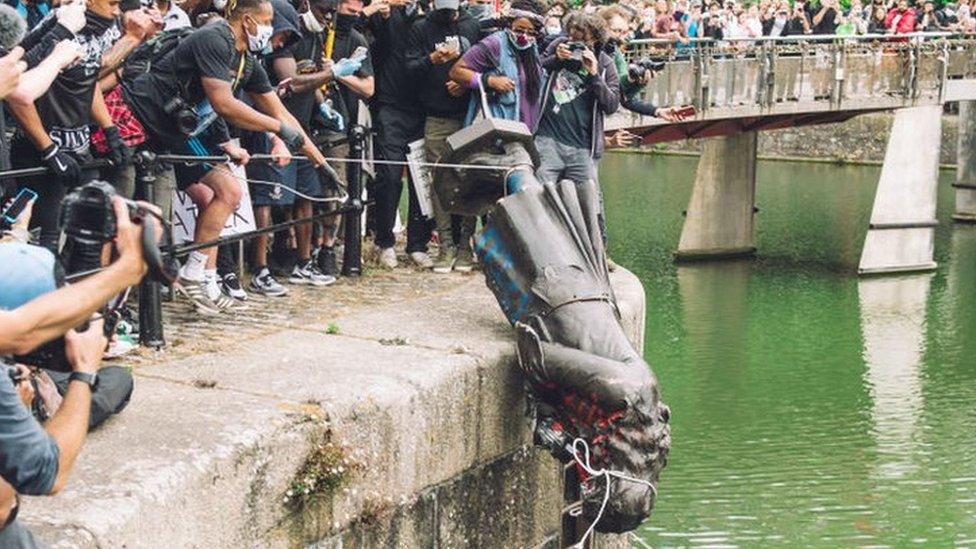
Much like the recent debate around statues in the UK, some people argue that removing these songs would be like erasing history, and that these songs were written a long time ago, and represent the views of people at that time, which today may feel outdated.
Prime Minister Boris Johnson says he is opposed to the BBC's decision to play instrumental versions of the songs.
"I think it's time we stopped our cringing embarrassment about our history," he told reporters.
- Published22 August 2019
- Published23 January 2017
- Published10 June 2020