Study analyses environmental impacts of pet diets
- Published

Researchers in Brazil have studied the production of more than 900 types of dog and cat food.
The results suggest that the production of wet food in pouches and cans has seven times the carbon emissions of dry food.
Pets are thought to eat around 20 per cent of the world's meat and fish.
The study hopes to consider the environmental impact of pet food as the population of pets increases.
Protein-rich ingredients one of the main sources of environmental impact
Pet ownership is increasing dramatically around the world and like humans, these little tummies need feeding too.
The top three countries in the world for dogs are the US, China and Brazil - and it's estimated there are 156 million dogs and 133 million cats expecting their two regular meals a day.
But not much study has been done into the impacts of food production for cats and dogs. And that's what researchers in Brazil wanted to find out.
There are so many options for feeding our pets; dry kibble, wet food, 'homemade' blended ingredients. And lots of these are high in protein, to help maintain a healthy diet.
But just like the food that we eat, the production process of pet food create emissions too - it has many of the same protein-rich ingredients we eat, such as beef, pork, chicken or fish.
The different sources of protein have different impacts regarding sustainability.
What did they look at?
There are some parts of an animal farmed for consumption considered to be a by-product, and not fit for humans to eat. Much of this is often used in pet food in addition to fresh meat.
To understand more clearly the impact of each kind of food the study focused on 212 ingredients and gathered data on the environmental impacts of how these ingredients were made. This included greenhouse gas emissions, sulphur produced and the land and water used to farm and breed the animals that go into the food.
They then worked out the environmental impact per 1000 kilocalories of food.
The results found that producing the food for an average 10kg dog on dry kibble would create about 830kg of carbon dioxide (CO2) per year.
But the report's author suggests that if the same dog were on a wet-food diet, the CO2 emissions to create that food would be about 6500kg.
Similar to dogs, the wet food for cats had matching increased environmental impacts.
What were the report's findings?
The report does accept that several ingredients used in pet food are considered by-products, and this could be considered as a factor that reduces the impact of these foods.
By-products are parts of an animal used in in food production that humans wouldn't eat, but is still processed into pet food. But it is not clear how much of a by-product is used and how much is fresh.
This present study finds that dry food has a lower environment impact but recognises that vets, breeders and many owners are increasing the use of homemade or home-prepared diets, which will have higher impacts.

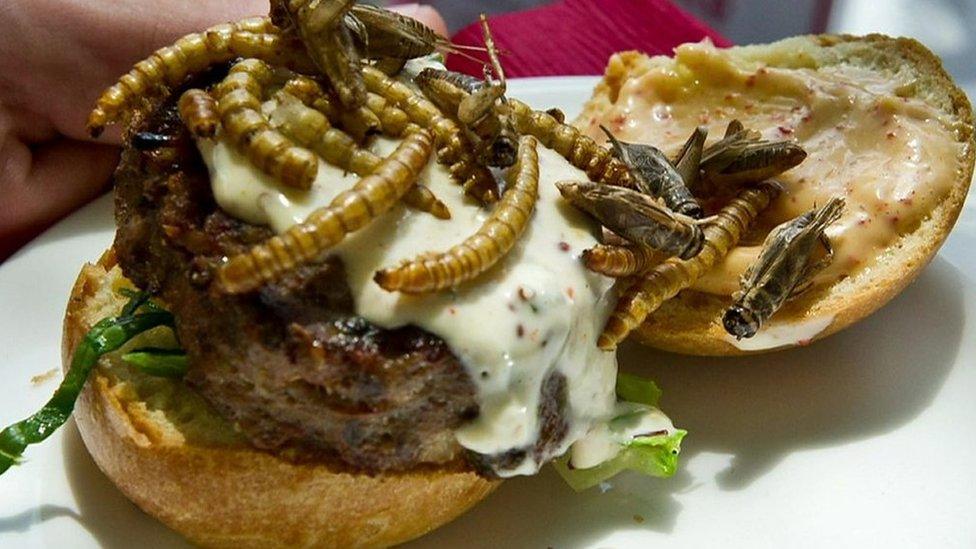
Mealworm anyone? Insects are known to be packed full of healthy proteins. See will we all be eating more of these little grubs to save the planet?
Are insect diets the future?
As carnivores, dog and cat diets often always contain animal proteins in combination with a variety of vegetables to maintain a healthy, nutritionally-balanced diet.
So moving pets completely off high protein foods is not necessarily the answer as this could have a negative impact on their health. But knowing where their food comes from and the carbon footprint it creates is useful, particularly as many of the foods we all eat come from the same sources.
And as the population of the world increases with the UN announcement of the UN announcement of the world's 8 billionth person there are lots of mouths to feed.
The study concluded that a "change of inclusion or ingredient should be considered depending on the nutrient requirement and diet composition as a whole... and the inclusion of alternative ingredients, such as insects, could improve the sustainability of a diet".
It's an idea for the future that isn't that surprising. It's been suggested for humans too!
They say that Entomophagy - which means eating insects - could help to fight world hunger and reduce pollution. The world's population is growing, so people need to produce more food to feed everyone - and there are lots of insects to go around.
Farmed animals like cows, sheep and pigs traditionally need a lot of space, so compared to producing meat, bugs don't take up much land, water or feed.
Not only that, unlike cattle, insect farming produces fewer greenhouse gases.
- Published26 June 2022
- Published25 April 2019
- Published19 August 2019