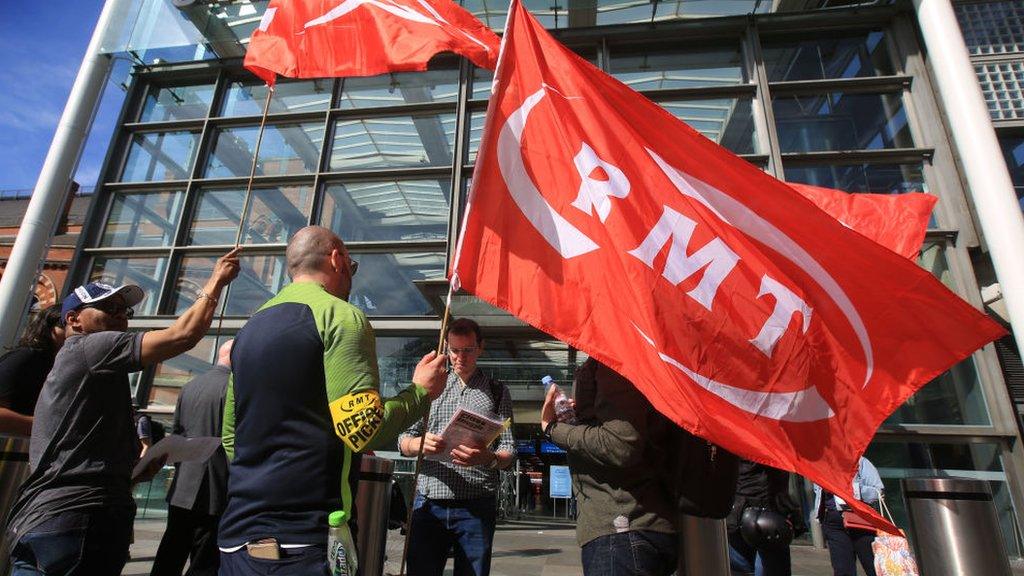
Teacher strikes: More action as teaching union rejects pay offer
- Published

Teachers will be going on strike in April and May, after rejecting a pay deal
Teachers in England and Northern Ireland will be going on strike again during April and May.
In England teachers will walk out for another two days, on Thursday 27 April and Tuesday 2 May.
The education secretary said it was "extremely disappointing".
Teaching unions in Northern Ireland have also said they will strike for a full day on Wednesday 26 April following a half-day protest on 21 February.
Why have teachers been going on strike?
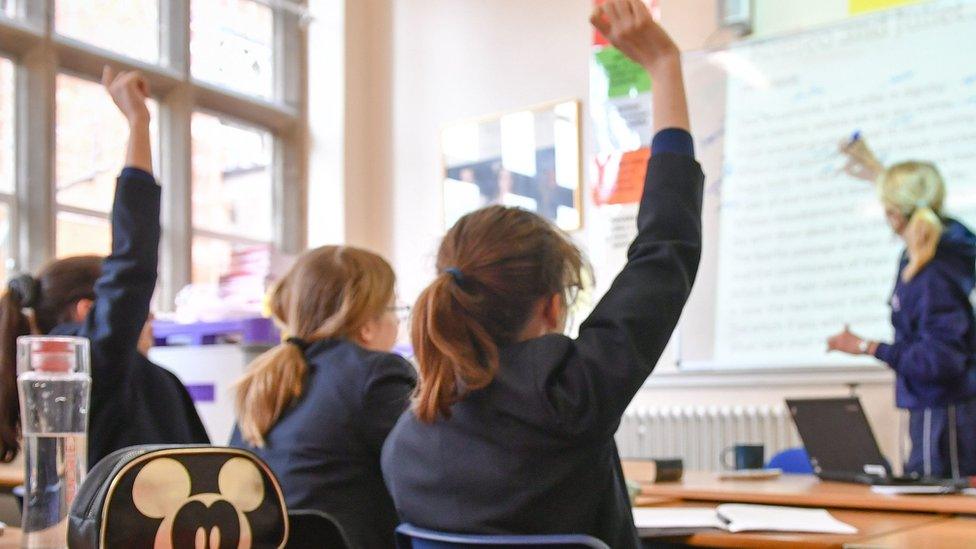
Teachers Strike: Pupils quiz their teacher about why she's going on strike
Teachers have been going on strike over pay and working conditions.
They say they are not being paid enough, and that schools do not have enough supplies or staff.
Strikes are organised by a unions - which is a group that represents workers.
During a strike, people people refuse to work in protest and the union leaders try to work out a deal which gets their members what they want.
Teacher strikes and protests have been taking place in England, Scotland, Wales and Northern Ireland during this school year.
A strike is when a group of workers decide to stop working to try to bring about change.
Employees do this when they want to protest against something they think is unfair where they work, like pay or working conditions.
Strikes often happen because workers want those in charge to listen to what they want.
A strike is a way of taking industrial action to protest.
Why are teachers going on strike in England again?

Members of the National Education Union (NEU) are gearing up to strike on 1 February
In England the teaching unions were offered a pay dealby the government, but staff who are members of the National Education Union (NEU) - an organisation that represents many teachers in England - refused to accept an offer of a pay rise from the government
The union said that the pay deal was not enough, the rises were less than has been offered to teachers in other parts of the UK, and it would not solve other problems teachers have, such as not enough staff in schools.
Teachers in the union had a vote whether to accept it or not - 98% of those who voted said they would not.
Strike - When people decide not to work as a form of protest
Walk out - A term for striking - it comes from the 19th century when people used to walk out of factories to protest working conditions
Union - A group in a company or organisation that stands up for workers' rights and pay
Ballot - Before unions go on strike they have to ballot for it, which means they vote to decide if they will go ahead with the action
Negotiations - Discussions between a union, workers, and a company
Education Secretary Gillian Keegan answers YOUR questions
Gillian Keegan, who is the government secretary for education, said she was disappointed with the decision and said more strikes will lead to "more disruption for children".
The NEU is not the only union which is involved in pay discussions and not all teachers are members.
Four unions have been involved in talks with the government and three other teaching unions, the NASUWT, Association of School and College Leaders and school leaders' union NAHT are also offering their members a vote on the same deal.
Northern Ireland

A teachers' protest in Belfast
In Northern Ireland, arguments have been going on over a pay deal for over a year.
Five unions have been taking action short of a strike - such as only working during school hours or not going to meetings.
On 21 February there was a half-day protest by four teacher groups but now all five teachers' groups will strike together on 26 April.
In a statement a spokesperson for the five unions said their members had "waited far too long for a satisfactory offer" on pay.
"Our members have watched governments in other jurisdictions make offers which will lead to pay levels far in excess of what is available in Northern Ireland."
Will school be cancelled because of the strikes?

It all depends on which teachers are striking in your school - whilst some schools may close, your school will tell you what its plans are.
During the last strikes in England, around 50% of schools were either closed or had disruption.
This means some classes may have been changed round, or schools may have had shorter days.
The National Education Union says there is a plan to support GCSE and A-Level students during the strike days.
It is expected that most schools in Northern Ireland will close on 26 April as almost every teacher is likely to be on strike.
What about Scotland and Wales?

Hundreds of teachers joined a rally outside the Scottish Parliament on the first strike day
Education is a devolved matter, meaning decisions are made by the separate governments.
In Scotland, teachers strikes have ended after teachers accepted a deal which will see their pay rise starting from April 2022 and a further rises going forward into 2024.
In Wales, while NEU members have agreed on a pay deal for 2022/23 and 2023/24, another union, NAHT Cymru - which represents school leaders - has rejected the offer.
Members are continuing to take action short of strikes - which includes refusing to attend evening meetings and only responding to calls and emails between 09:00 and 15:00 BST.
- Published23 January 2023
- Published26 August 2022