Postpublished at 18:05 GMT 27 March 2015
That brings us to the end of our live coverage for today. You can continue to follow the latest developments on the BBC News website.
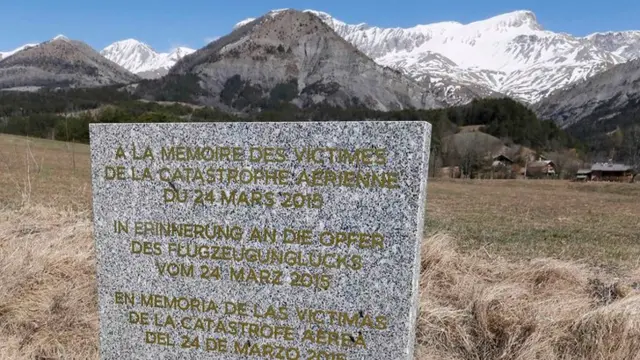 Image source, Reuters
German prosecutors say material found at the home of Germanwings co-pilot Andreas Lubitz suggests he concealed an illness from his airline and the authorities
Medical documents, including a current sick note, were found but had been ripped up
A medical clinic in Duesseldorf confirmed Lubitz was a patient, but said he had not received treatment for depression
French prosecutors believe he deliberately crashed the plane into the French Alps on Tuesday, killing himself and 149 people on board
A major recovery operation is continuing at the crash site near Seyne-les-Alpes. Families of the victims have visited the scene
That brings us to the end of our live coverage for today. You can continue to follow the latest developments on the BBC News website.
Image source, ReutersThe European Aviation Safety Agency has recommended that airlines require two crew members to be in an plane's cockpit at all times. Many carriers have already changed their policies following Tuesday's crash, including Germanwings' parent company Lufthansa.
The recommendation is not legally binding. But the BBC's business reporter Theo Leggett says it sends out a powerful signal of intent, which airlines are unlikely to ignore.
Why did Andreas Lubitz crash the plane? And can depression really explain his actions? The BBC News website examines the unanswered questions around the Germanwings crash.
@annaholligan
BBC correspondent Anna Holligan tweets, external: "Sunset outside Andreas Lubitz home. Police maintain watchful presence."

Police are now examining DNA samples from the site of the crash at a mobile laboratory set up at Seyne-les-Alpes.
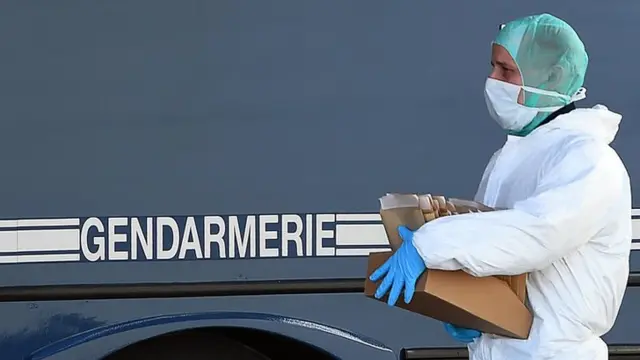 Image source, AFP
There are detailed guidelines on dealing with mental health issues among pilots in a 2012 report by the International Civil Aviation Organization, external, a UN agency.
The report says: "Psychological testing of aircrew members is rarely of value as a screening tool. Personality tests alone have not been proven to be reliable tools to predict mental disorders or to assess with any degree of certainty an applicant's suitability for an aviation career."
The deputy mayor of Seyne-les-Alpes Michel Rey and his wife Diana have been speaking to the BBC about the atmosphere at the crash site.
Mrs Rey said a memorial ceremony for the victims yesterday had been "extremely distressing" particularly for the families.
"They stayed I suppose for perhaps an hour. There was a speech from the German ambassador. We couldn't hear it, but she was in tears. Apparently it was extremely moving. Some of them took stones, and they left photographs and flowers."
The couple have been visiting the site to offer support to families and response teams. Mrs Rey said the mountains were "incredibly beautiful", but admitted they didn't seem quite so beautiful today.
 Image source, EPA
Reuters news agency has released video filmed on the ground, external at the crash site. It shows investigators in climbing equipment, combing the rugged terrain for clues.
Markus Wahl from the German Pilots Association has been reacting to the news that Mr Lubitz had been issued with a medical note by doctors, but chose not to share it with his employers.
He said: "If a colleague was signed off sick then I have to be very clear, someone with a sick note has no business being in a cockpit. He should have stayed home. I cannot comprehend that."
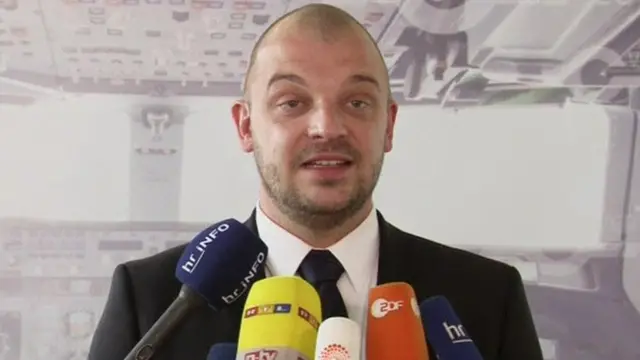 Image source, Reuters
Could the Germanwings crash have been avoided? James Fallows, at The Atlantic, external, says probably not. He reflects on the problem of cockpits that have to be impregnable yet accessible in emergencies - an "unavoidable dilemma" - and he questions whether better screening is necessarily the answer.
"This is a terrible episode, all the worse-seeming because it was intentional. But even as we absorb its horror and extend deep sympathies, it is worth resisting the temptation to think that some new regulation or device can offer perfect protection against calculated malice. Unfortunately, none can."
Juan Padro - from Sant Cugat del Valles, near Barcelona - lost his ex-wife, his daughter and granddaughter in the crash. Three other people from the small town were also killed.
Speaking outside the hotel in Barcelona, where families have been receiving help, he said: "There is nothing that can be done or that anyone can say, that changes the fact that I have lost such loved ones.
"It makes no difference to me whether it was an accident or whatever. For me, I don't want to know. It doesn't interest me."
He praised the French prosecutor overseeing the investigation for "giving us information with complete transparency".
Mr Padro added: "I like to be positive and what I have taken from all of this is that people are very good."
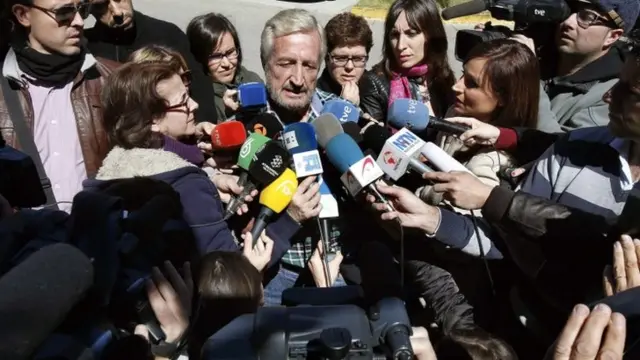 Image source, EPA
Between 400-600 pieces of human remains have been retrieved from the crash site, the Associated Press news agency quotes French police as saying. There are no intact bodies, the police says.
Adding to its statement, external (in German) Duesseldorf University Clinic said Mr Lubitz's medical files were being passed on to police.
"We will entirely and unreservedly support the investigations of the state prosecutor," said Professor Dr Klaus Hoeffken, medical director and chairman of the board of the clinic.
"Our deepest sympathy goes out to the victims of the plane catastrophe," he added.
Germanwings has issued a statement, external confirming it did not receive a sick note from Andreas Lubitz.
The airline said: "Currently there is media coverage that the co-pilot of flight 4U 9525 was given a sick note for the day of the accident on Tuesday. Germanwings declares that a sick note for this day was not submitted to the company.
"This corresponds to the insights of the senior prosecutor of Dusseldorf," the statement continued.
Duesseldorf University Clinic says Mr Lubitz had been receiving treatment there - but denies that this was for depression, contrary to some media reports. The clinic says it cannot give further details because of rules governing patient confidentiality.
Parts of the British media that have linked Lubitz's mental health problems to his actions have been accused of being "overly simplistic", reports BBC Newsbeat.
Three leading mental health groups, Mind, external, Time to Change, external and Rethink Mental Illness, external, have released a joint statement, external condemning the "widespread speculation", saying it only adds to the "stigma surrounding mental health problems".
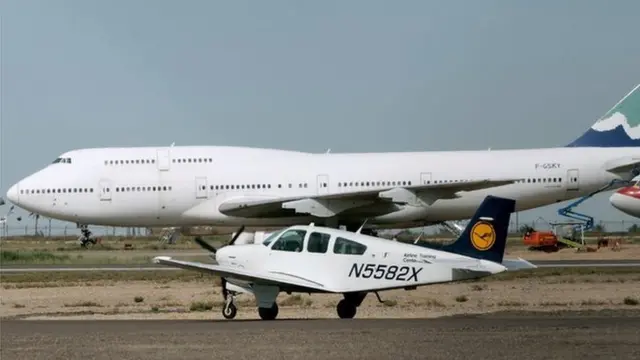 Image source, Reuters
This is a view of the Lufthansa flight school in Arizona, where Mr Lubitz received some of his training. Arizona's arid climate and clear skies make it an ideal location for flight-training schools.
Germany's Rheinischer Post newspaper reports (in German), external that investigators who searched Andreas Lubitz's homes found sick notes from two doctors.
Duesseldorf's University Hospital told the paper that the 27-year-old had visited the hospital for "diagnostic clarifications" in February 2015 and, most recently, on 10 March 2015. The hospital would not give any further details, citing medical confidentiality.
More from the Royal College of Psychiatrists, responding to reports that Andreas Lubitz had suffered from depression.
Professor Sir Simon Wessely, the College's President, said depression was very common - affecting up to one in four people in Britain at some point - and that people who had been treated for depression would not be considered at risk of doing something similar.
"I think it's very, very unlikely that you'll ever be able to screen, given the frequency of depression and the rarity of this event," he told BBC Radio 4.
"There are numerous pilots - and I've personally actually dealt with some, and I have colleagues who do this for a living - who have had a history of depression and then will go on, resume flying, perfectly safely, for maybe tens of years afterwards.
"So having had a history of depression, so far, has not been a bar to having this kind of career, providing you are open, honest, get treated and recover, as most do."
Vanity Fair magazine's William Langewiesche says having two people, external in the cockpit at all times is "an easy solution, but it's not a perfect solution".
"It's a lot harder to do something like this if there are two people in the cockpit. It's not impossible, but it's harder."
Langewiesche, himself a pilot, has investigated several air disasters as a journalist. Interviewed by Vanity Fair on Thursday, he said it was not necessarily dangerous to leave only one person in the cockpit - "but it's dangerous when a guy with murderous intent is flying".
